Technology continues to evolve in the construction industry, enabling faster construction, greater accuracy, and lower costs. For example, modeling methods have evolved from Computer-Aided Design (CAD), which offered 2D drafting and basic 3D modeling, to Building Information Modeling (BIM). However, to get the full benefit of the BIM process, it must be fed with the most accurate data to identify design conflicts sooner rather than later. That’s when 3D laser scanning for data capture in construction can help.
How Laser Scanning Reduces Rework Costs
The primary cause of rework in industrial construction projects is errors or omissions in the finalized set of drawings and specifications that guide the actual construction process. Incomplete, unclear, or incorrect documentation can lead to poor communication between all involved in the construction process, including project managers, engineers, workers, regulators, and suppliers.
These errors and omissions may not be discovered until an inadequate or excessive amount of materials arrives, the building infrastructure components or service systems are found not to fit as intended, or the structure has already been built but is rejected by inspectors. If high-accuracy measurements could have been captured with 3D scanners for construction and integrated into the BIM project, imagine the time and cost savings in these scenarios.
Applications of 3D Scanning Across Construction Projects
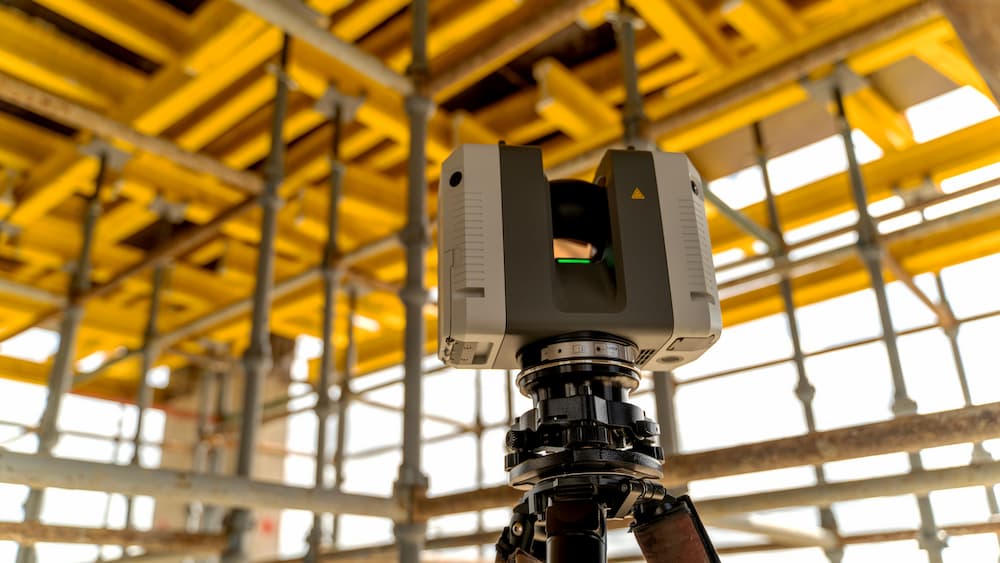
Laser scanning in construction uses laser light to emit millions of laser pulses and measure the time it takes for them to bounce back. This process creates a precise 3D digital map that captures existing conditions with high accuracy, measured in millimeters. The precision of these measurements far exceeds that of other methods, such as photogrammetry. The 3D scanning data can then be integrated into the BIM project management process by comparing it with design plans or by conducting simulations.
MEP Systems and Pipe Fittings
The accuracy of laser scanning minimizes the need for on-site measurements during new construction or renovation projects, reducing errors and labor costs. It provides a better plan and visualization of the physical overlap among pipes, ducts, electrical conduits, and structural beams, while identifying any layout or location errors, physical intersections, or conflicts among these system components. The added benefit is that pipes and other components can be prefabricated off-site, ensuring a precise fit.
Structural Alignment
This mapping method can identify structural alignments or deformities, which are helpful when planning repairs, renovations, or restorations. This data helps avoid ordering unsuitable materials for the project’s needs or creating additional problems when construction begins. Structural issues, such as poor drainage, can be pinpointed by revealing the configuration of underground pipes and exact slopes, along with any blockages, misalignments, or low spots that traditional methods may have missed.
Retrofits
Adding new or improved components to an existing building or structure that was not part of the original design will also benefit from 3D laser scanning. The process will ensure there are no conflicts with existing elements and sufficient clearance or access when adding HVAC systems, renewable energy sources, new materials to enhance overall durability, or smart building controls and management systems.
Why Choose PALA Group for Laser Scanning Services
The PALA Group has decades of experience in turnkey industrial construction solutions, handling everything from design and fabrication to installation and maintenance. Even today, we continue to exceed the industry’s expectations when providing more efficient and cost-effective construction project management solutions through the integration of laser scanning technology with BIM modeling. Schedule an appointment to request a consultation or demo of PALA’s services.
Image credit: // Shuterstock // Ultraskrip