by PALA Group | Sep 2, 2026 | Blog
Process Skid Fabrication: How to Scope a Skid Package for Your Plant
- Shop Limits Set the Design: Crane capacity, hook height, and road transport permits determine what a skid can actually be, and they should be established before the process design is fixed.
- Alloy Segregation Protects Reliability: Stainless and high-nickel fabrication needs to be physically separated from carbon steel work, because particulate transfer causes surface contamination that outlives installation.
- Code Scope Belongs in the Specification: A pressure vessel mounted on a skid falls under ASME Boiler and Pressure Vessel Code Section VIII and requires a shop holding the applicable Certificate of Authorization.
A process skid is a structural base carrying a functional section of a process, assembled and tested as one unit before it ships. Plant expansions and equipment replacements arrive at a facility less and less as loose equipment and pipe. They arrive as skids.
A well-scoped package shortens the field schedule and moves work out of an operating unit. A poorly scoped one produces a module that cannot be lifted or cannot be trucked. Most of that difference is settled before anyone cuts steel.
What a Skid Package Covers
Scope usually includes the structural frame, mounted equipment, interconnecting piping, valves and instrumentation, and the access needed to operate and maintain what sits on it. It tends to get thin at the boundaries: termination points, utility connections, instrument wiring, and surface preparation. Naming those early keeps field scope from expanding after delivery. PALA fabricates process skids and structural skid units alongside coded vessels, tanks, and piping, and when a vessel forms part of the skid it carries its own code requirements. For the fuller definition, see what a modular process skid is.
Scoping the Package
Shop-Fabricated or Field-Built?
Shop fabrication moves labor hours off the site and into controlled conditions. The Construction Industry Institute found it helps project teams meet the challenges of demanding schedules, adverse site conditions, and limited availability of skilled labor.
| Factor |
Shop-fabricated skid |
Field-built system |
| Schedule |
Parallel with civil and foundations |
Sequential, waits on site readiness |
| Conditions |
Controlled shop, fixed cranes |
Weather and congestion dependent |
| Permits in a live unit |
Most work performed outside it |
Hot work and entry permits per task |
| Size ceiling |
Shop crane and road transport |
Site access and rigging only |
| Tie-in flexibility |
Terminations fixed at design |
Adapts to verified conditions |
| Best fit |
Congested sites, tight shutdowns |
Oversize systems, uncertain geometry |
Field construction still fits when a system is too large to transport in one piece, or when tie-in geometry cannot be fixed until existing conditions are verified.
What Sets the Size Limit?
Three limits set the envelope, and they are rarely the ones a process designer starts with. Overhead crane capacity and hook height determine what can be lifted, turned, and stacked. Testing is the second, because a skid hydrotested as an assembly has to be supported somewhere capable of holding it. PALA’s Hammond, Louisiana facility has 70,000 square feet under roof, a 75-ton overhead crane, a 23-foot hook height, and a hydrotest pad rated for approximately one million pounds.
The third is the road. Width, height, and weight all trigger permit thresholds, and transport is often the binding constraint rather than fabrication. Establishing the shipping envelope early costs less than redesigning a module that cannot legally leave the yard.
How Should Alloys and Welding Be Specified?
Material selection follows the process. Carbon steel serves many utility and hydrocarbon applications, while corrosive, high-purity, or elevated temperature service calls for stainless, duplex, or a high-nickel alloy. PALA works in stainless steel, duplex stainless, chrome, nickel, Monel, Hastelloy, Inconel, Alloy 20, and Haynes alloys, supported by more than 350 welding procedures.
Segregation matters more than the alloy list. Carbon steel particulate transferred onto stainless causes surface contamination and rust bloom that can compromise corrosion resistance long after installation, which is why PALA dedicates 10,000 square feet of its Hammond facility to a segregated alloy shop. Specifications should also state weld examination requirements and acceptance criteria rather than leaving them to shop standard.
Which Codes Should the Specification Name?
Different parts of a skid answer to different standards.
PALA holds R, U, U2, and S stamps and fabricates Division 1 and Division 2 vessels, Section VIII pressure parts, and vessel walls up to 3.5 inches thick. An unstamped shop cannot deliver a coded vessel, so confirming authorization early avoids a mid-project substitution.
From Shop to Startup
What Ships With the Skid?
Pressure testing, functional checks, and a factory acceptance test give an owner the chance to reject or correct work while the skid is still reachable from all sides. Documentation should travel with the module: an inspection and test plan agreed before fabrication, weld records, material test reports, and a turnover package at delivery. PALA runs quality this way, from the inspection and test plan through turnover.
What Happens at the Site?
Field scope generally includes foundations sized for the module, offloading and rigging, setting and alignment, piping tie-ins, electrical and instrumentation connections, and commissioning support. Tie-ins are where schedule risk concentrates, and hot taps or in-service welding can sometimes allow connections without a full shutdown. PALA self-performs mechanical piping, structural steel, equipment setting, and civil work, which allows shop scope and field scope to be planned together rather than handed between contractors.
Process Skid FAQs
What is a process skid?
A process skid is a structural base carrying a functional section of a process, with the equipment, piping, valves, and instrumentation mounted, assembled, and tested as one transportable unit before it ships.
How large can a process skid be?
Three limits set the ceiling: the fabricator’s crane capacity and hook height, the shop’s ability to test the skid as an assembly, and road transport permit thresholds for width, height, and weight. Transport is often the binding constraint.
What certifications should a process skid fabricator hold?
It depends on what sits on the skid. A new coded pressure vessel requires an ASME U or U2 Certificate of Authorization, and repair or alteration of an existing coded vessel requires a National Board R certificate. Bioprocessing service adds ASME BPE, and dairy or food contact adds the 3-A Symbol.
What drives the cost of a process skid?
Alloy selection, code scope, physical size, testing requirements, and transport distance. High-nickel and duplex alloys carry higher material and welding cost than carbon steel, coded vessels add inspection and documentation, and any dimension crossing a permit threshold adds transport cost.
Partner With PALA for Process Skid Fabrication
A few questions separate fabricators quickly. Match the shop’s crane capacity, hook height, and testing capability against the module you need. Confirm which code stamps your equipment requires, ask how alloy work is kept away from carbon steel and what arrives in the turnover package, then ask who performs the field setting and tie-in work. A skid that transfers cleanly from shop to field is usually one where the same team planned both.
PALA has fabricated industrial equipment in Louisiana since 1973, starting with mechanical piping and equipment installation for the state’s sugar industry and expanding into pulp and paper, refining, petrochemical, and food and beverage work. The company is employee-owned and provides services in over 30 states from offices in Louisiana and Texas. To discuss a process skid package or shop capacity, explore PALA’s fabrication shop capabilities or contact our team.
by PALA Group | Jun 26, 2026 | Blog
Key Takeaways
- Industrial maintenance is a proactive operational strategy that supports safety, uptime, and asset reliability.
- Working with experienced industrial contractors allows for a coordinated plan for complex maintenance requirements.
- Local safety standards, environmental conditions, and operational demands directly impact how maintenance is planned and executed.
- In addition to field maintenance services, embedded technical resources such as planners, schedulers, and project controls personnel can strengthen execution and improve project outcomes.
Industrial operations across Louisiana rely on consistent maintenance to stay safe, productive, and compliant. From refineries and petrochemical plants to manufacturing facilities, unplanned downtime can quickly impact production schedules, safety performance, and operating costs.
Professional industrial maintenance services, such as those provided by PALA, play a critical role in keeping essential systems operating reliably while supporting operational goals.
For plant managers and facility directors, maintenance is not simply a response to equipment failure. It’s an ongoing strategy that protects assets, supports workforce safety, and helps facilities meet production requirements in a challenging Gulf Coast environment.
Why Industrial Maintenance Matters for Louisiana Facilities
The local industrial sector depends on complex systems that include piping networks, tanks, pressure vessels, rotating equipment, and structural components. These assets operate under high pressures, elevated temperatures, and continuous production cycles. Without proper maintenance, small issues can escalate into major shutdowns or safety incidents.
Routine industrial facility maintenance helps reduce unexpected failures, minimize emergency repairs, and extend the service life of critical equipment. More importantly, it allows facility leaders to plan work around production demands rather than reacting to breakdowns that disrupt operations. When maintenance is approached as a long-term operational strategy, facilities gain greater control over uptime, costs, and risk.
What Industrial Facility Maintenance Can Include
Industrial maintenance requirements vary by facility, industry, and operating conditions. However, many Louisiana facilities share common needs that benefit from a coordinated maintenance approach. These services may include mechanical support, piping repairs and modifications, structural maintenance, equipment servicing, tank-related work, turnaround support, and routine maintenance activities that keep facilities operating efficiently day after day.
Because no two facilities operate the same, maintenance plans must be tailored to specific equipment, safety standards, and production goals. Working with an experienced industrial contractor allows facility managers to coordinate multiple maintenance disciplines through one reliable team.
The Value of Regional Industrial Experience
Louisiana facilities operate within a unique industrial landscape shaped by Gulf Coast weather, regulatory requirements, and demanding safety expectations. Contractors with regional experience understand how these factors influence maintenance planning, execution, and scheduling.
PALA brings experience across industrial construction, fabrication, maintenance, tanks, pressure vessels, and related services. That background allows maintenance work to be performed with an understanding of refinery, petrochemical, and manufacturing environments. Familiarity with regional safety standards, permitting processes, and site conditions helps projects move forward efficiently while maintaining compliance.
Facilities benefit from partnering with a team that understands not only the technical work but also the operational realities of Louisiana’s industrial sector.
Planning Maintenance Around Uptime and Safety
Effective maintenance planning balances production demands with safe work practices. Proactive inspections, scheduled service intervals, and well-coordinated turnarounds allow facilities to address issues before they disrupt operations. This planning reduces the risk of emergency repairs, which often entail higher costs and greater safety exposure.
Strong maintenance programs also support workforce safety by ensuring that equipment operates as designed and that potential hazards are identified early. By aligning maintenance with operational schedules, facilities can maintain productivity while creating safer working conditions for employees and contractors alike.
Beyond traditional maintenance services, many facilities require additional project and operational support resources. PALA remains ready to support maintenance and turnaround efforts through the deployment of technical professionals, including schedulers, planners, project controls specialists, procurement support, document control personnel, and other embedded resources as needed. This flexible approach allows facilities to supplement internal teams while maintaining continuity across critical projects and maintenance programs.
Partner with PALA for Industrial Maintenance in Louisiana
Reliable industrial maintenance requires more than technical skill. It demands experience, planning, and a deep understanding of complex facilities. PALA supports industrial maintenance needs across Louisiana with turnkey capabilities and experience in demanding industrial environments.
Whether supporting routine maintenance, major turnarounds, embedded workforce solutions, or specialized technical services, PALA provides scalable resources tailored to each facility’s operational requirements. By combining maintenance expertise with industrial construction, fabrication, scheduling, planning, project controls, and staffing capabilities, PALA helps facilities maintain uptime, manage risk, and achieve long-term operational performance.
Hear from other clients about their experience working with PALA:
“PALA has an incredible group of people running the business. They’re honest, to the point, and will not waste your time.” – C.G. Google Reviews
To discuss ongoing maintenance, turnaround support, secondment staffing, or technical resource requirements for your facility, explore PALA’s industrial maintenance services, or contact our team to start the conversation.
by PALA Group | Mar 3, 2026 | Blog
In the industrial sector, the integrity of your infrastructure is the foundation of your operational success. For facilities managing high-capacity storage and high-pressure processes, corrosion is a persistent and costly adversary. Implementing a high-performance anti corrosion coating or lining system is not merely a maintenance task; it is a critical strategy for asset preservation and risk mitigation.
Why Anti-Corrosion Protection Matters for Tanks & Pressure Vessels
The real cost of corrosion extends far beyond the surface of the metal. It manifests in unplanned downtime, environmental leaks, catastrophic safety risks, and the premature replacement of expensive capital equipment. Tanks and pressure vessels are especially vulnerable, as they often contain volatile chemicals or operate in harsh coastal and industrial environments.
Industries ranging from chemical processing and energy to water treatment and heavy manufacturing rely on these assets daily. By selecting the correct corrosion prevention coating, operators can significantly extend the service life of their equipment, ensure compliance with API and ASME standards, and maintain a safe working environment for their personnel.
Common Anti-Corrosion Coating & Lining Systems Compared
Selecting the right material requires an understanding of the specific chemical and thermal stresses the vessel will face.
Epoxy Coatings
- Strengths: Epoxies are favored for their excellent adhesion and superior chemical resistance. They create a hard, durable barrier that is ideal for immersion service.
- Limitations: They can be sensitive to UV radiation, leading to “chalking” if used outdoors without a topcoat. They can also become brittle in extreme thermal cycling.
- Best Use Cases: Internal tank linings, fuel storage, and secondary containment areas.
Polyurethane Coatings
- Strengths: These systems offer exceptional flexibility, impact resistance, and UV stability.
- Limitations: Generally, they provide lower resistance to aggressive acids and solvents compared to high-build epoxies.
- Best Use Cases: External surfaces of tanks and vessels, outdoor piping, and areas prone to mechanical abrasion.
Rubber Linings
- Strengths: Rubber offers superior resistance to concentrated acids and abrasive slurries, along with excellent shock absorption.
- Limitations: Installation is highly complex and typically carries a higher initial cost.
- Best Use Cases: Highly corrosive phosphoric or hydrochloric acid storage and slurry transport tanks.
Other Specialty Linings
When dealing with extreme temperatures or highly specialized chemistries, PALA Group utilizes vinyl ester, phenolic, or hybrid systems. These are engineered for specific worst-case operating conditions where standard coatings would fail.
Choosing the Right System for Harsh Operating Environments
Material choice is only one part of the equation. To ensure a corrosion prevention coating performs as intended, you must consider the full operating profile:
- Chemical Exposure: Is the exposure continuous or intermittent?
- Physical Stress: Does the vessel experience rapid thermal cycling or high internal pressures?
- Surface Preparation: Even the most advanced coating will fail without white-metal abrasive blasting and precision application.
The expertise of your contractor is the most significant factor in system selection. An experienced partner like PALA Group evaluates these variables to match the coating chemistry to your real-world industrial conditions.
Protect Your Investment With Proactive Maintenance & Inspections
To maximize the ROI of your lining, a proactive maintenance schedule is essential. We recommend a tiered inspection approach:
- Annual Visual Inspections: Performed during scheduled shutdowns to check for blistering, cracking, or mechanical damage.
- Detailed Condition Assessments: Every 3 to 5 years (depending on service severity), including ultrasonic thickness testing and holiday testing to detect pinholes.
Early warning signs, such as localized rust spots or coating discoloration, should prompt an immediate consultation with an industrial contractor. Partnering with a turnkey provider like PALA Group, an employee-owned company with over 50 years of experience, ensures your tanks and pressure vessels are fabricated, coated, and maintained to the highest industry standards.
Contact PALA Group to schedule a coating assessment or maintenance check-up and ensure your tanks and pressure vessels stay protected in even the harshest environments.
Image credit: fotokaleinar
by PALA Group | Jan 28, 2026 | Blog
In the high-stakes world of industrial operations, a single undetected leak can cause huge financial losses, safety risks, and serious environmental harm. For facilities that manage pressurized systems, chemical storage, or complex piping networks, a strong Leak Detection and Repair (LDAR) program is essential for maintaining operational integrity. PALA Group understands that proactive maintenance is the best way to protect against the dangers in heavy industry.
What Is LDAR and Why Does It Matter for Environmental Protection
LDAR is a structured system designed to identify and repair leaking components, such as valves, pumps, connectors, and compressors, before they escalate into significant spills or emissions. Undetected leaks can release volatile organic compounds (VOCs) and hazardous air pollutants, degrading local air quality and potentially resulting in substantial fines from regulatory bodies such as the EPA.
Beyond compliance, a dedicated leak detection and repair program protects the surrounding ecosystem and the safety of the workforce. When leaks go unnoticed, they can lead to soil contamination, groundwater pollution, and an increased risk of fire or explosion. By implementing a comprehensive LDAR strategy, industrial leaders demonstrate a commitment to sustainable practices and the long-term stability of their assets.
Modern Leak Detection Technologies Used in LDAR Programs
The effectiveness of an LDAR program depends heavily on the sophistication of the detection methods employed. Modern technology has moved far beyond simple visual inspections, using specialized sensors to detect microscopic failures.
- Acoustic Detection: This method is highly effective for pressurized systems. These sensors listen for the specific high-frequency sounds generated by escaping fluids or gases. By analyzing sound waves, technicians can pinpoint the exact location of a leak within a complex piping network.
- Infrared (IR) Imaging: Also known as optical gas imaging, this technology uses specialized cameras to detect gas clouds invisible to the naked eye. It enables rapid scanning of large areas, allowing real-time detection of fugitive emissions without halting operations.
- Ultrasonic Methods: Ultrasonic tools detect the characteristic frictional sounds produced by gas flowing through a small orifice. This is particularly useful for early-stage leak identification in vacuum systems or high-pressure steam lines, often detecting issues before they are audible to human ears.
Proactive Monitoring Strategies to Prevent Spills and System Failures
Routine inspections are a key part of proactive monitoring strategies to prevent spills and prevent problems before they occur, along with continuous monitoring systems. By adding sensors directly to the infrastructure, facilities can get instant alerts whenever there is a pressure drop or a chemical signature is detected.
Catching leaks early greatly reduces environmental damage and cleanup costs. When a leak is found early, repairs are usually small and easy to manage. In contrast, waiting for a visible spill often leads to widespread downtime and major cleanup efforts. Including LDAR in preventative maintenance planning makes sure that every vessel, tank, and pipe is checked on a schedule based on its age and service conditions.
How PALA Group Integrates Leak Detection into Comprehensive Maintenance Programs
Since 1973, PALA Group has built a legacy of excellence in turnkey industrial construction and maintenance. Our approach to LDAR is founded on our deep technical capability in pressure vessel fabrication and API standard tank construction. We do not view leak detection as a standalone task but as an integral part of our comprehensive maintenance solutions.
PALA Group aligns every LDAR program with the specific environmental compliance goals of our clients. Whether we are servicing above-ground storage tanks or complex alloy vessels, our employee-owned team brings a personal approach and an authoritative level of expertise to every project. We handle the design, fabrication, and ongoing maintenance, ensuring that your facility operates at peak efficiency while maintaining the highest safety standards.
Partner with PALA Group to implement advanced LDAR technologies that protect your assets, ensure compliance, and reduce environmental risk.
Image credit: // Shutterstock // NASAKRIT bbb
by PALA Group | Jan 5, 2026 | Blog
Technology continues to evolve in the construction industry, enabling faster construction, greater accuracy, and lower costs. For example, modeling methods have evolved from Computer-Aided Design (CAD), which offered 2D drafting and basic 3D modeling, to Building Information Modeling (BIM). However, to get the full benefit of the BIM process, it must be fed with the most accurate data to identify design conflicts sooner rather than later. That’s when 3D laser scanning for data capture in construction can help.
How Laser Scanning Reduces Rework Costs
The primary cause of rework in industrial construction projects is errors or omissions in the finalized set of drawings and specifications that guide the actual construction process. Incomplete, unclear, or incorrect documentation can lead to poor communication between all involved in the construction process, including project managers, engineers, workers, regulators, and suppliers.
These errors and omissions may not be discovered until an inadequate or excessive amount of materials arrives, the building infrastructure components or service systems are found not to fit as intended, or the structure has already been built but is rejected by inspectors. If high-accuracy measurements could have been captured with 3D scanners for construction and integrated into the BIM project, imagine the time and cost savings in these scenarios.
Applications of 3D Scanning Across Construction Projects
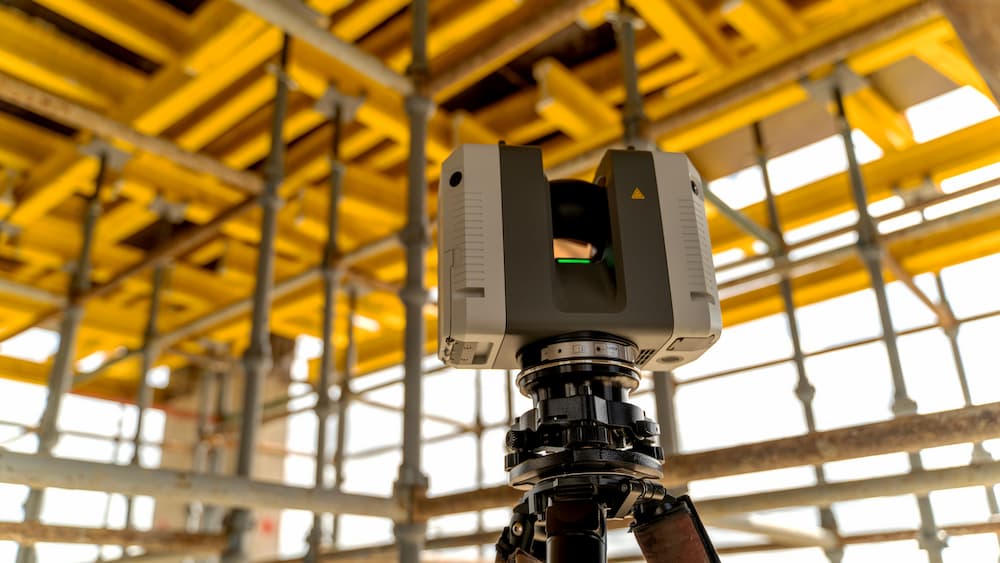
Laser scanning in construction uses laser light to emit millions of laser pulses and measure the time it takes for them to bounce back. This process creates a precise 3D digital map that captures existing conditions with high accuracy, measured in millimeters. The precision of these measurements far exceeds that of other methods, such as photogrammetry. The 3D scanning data can then be integrated into the BIM project management process by comparing it with design plans or by conducting simulations.
MEP Systems and Pipe Fittings
The accuracy of laser scanning minimizes the need for on-site measurements during new construction or renovation projects, reducing errors and labor costs. It provides a better plan and visualization of the physical overlap among pipes, ducts, electrical conduits, and structural beams, while identifying any layout or location errors, physical intersections, or conflicts among these system components. The added benefit is that pipes and other components can be prefabricated off-site, ensuring a precise fit.
Structural Alignment
This mapping method can identify structural alignments or deformities, which are helpful when planning repairs, renovations, or restorations. This data helps avoid ordering unsuitable materials for the project’s needs or creating additional problems when construction begins. Structural issues, such as poor drainage, can be pinpointed by revealing the configuration of underground pipes and exact slopes, along with any blockages, misalignments, or low spots that traditional methods may have missed.
Retrofits
Adding new or improved components to an existing building or structure that was not part of the original design will also benefit from 3D laser scanning. The process will ensure there are no conflicts with existing elements and sufficient clearance or access when adding HVAC systems, renewable energy sources, new materials to enhance overall durability, or smart building controls and management systems.
Why Choose PALA Group for Laser Scanning Services
The PALA Group has decades of experience in turnkey industrial construction solutions, handling everything from design and fabrication to installation and maintenance. Even today, we continue to exceed the industry’s expectations when providing more efficient and cost-effective construction project management solutions through the integration of laser scanning technology with BIM modeling. Schedule an appointment to request a consultation or demo of PALA’s services.
Image credit: // Shuterstock // Ultraskrip